|
The cost of pet food packaging lines largely depends on the productivity, product dimensions, and packaging formats required by customers. As packaging service providers, it's important that you need to trade off between these factors. Companies want to convert as many different SKUs as possible as quickly as possible. Maximizing their production is crucial. One of the common defects in facilities packaging wet pet food is failing to separate the dry and wet sides of the production line. Wet pet food plants have a lot of liquid handling, starting from rinsing and filling of cans. There is also a large amount of hot steam in the air, creating a very humid area. Proper production line design and equipment ensures that this humid environment does not severely damage the labeling and packaging side of the production line. Therefore, when we talk about wet and dry, we need to distinguish between sections of the process that use water and heat versus those that don't. Materials on the dry side of the production line, whether labels or case/pack erection, are often paper, cardboard, corrugated board, or other materials susceptible to humid environments. We need to pay special attention to establishing boundaries between these environments. In specific cases, equipment selection is also needed to help dry and prepare cans for secondary packaging. If there is too much overlap between these environments, you may cause reduced efficiency of dry-side equipment.

To maximize yield, allow packaging line service providers to review the tasks the production line needs to perform in advance (for example: can sizes, packaging formats, labels, etc.). Understand customer business, machine standards, and packaging machine speed and capabilities. It's also necessary to work with companies to deeply understand their expected operational concepts. From staffing to conversions, to automation, to manual operations, product types, etc.
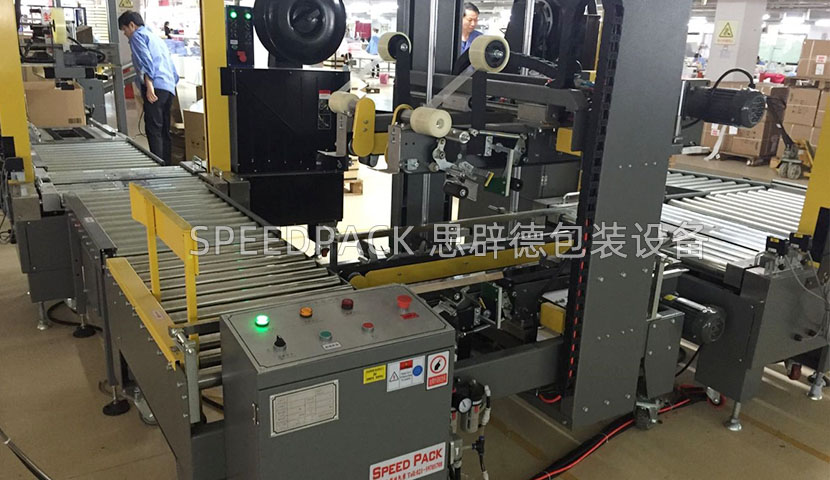
When SPEEDPACK designs packaging lines for customers, we pay special attention to raw material movement, customer staffing and automation requirements, and their requirements for production line flexibility. Maximizing the number of SKUs that can be run is most important. We help enterprises select specific machines where these options can create quick and effective conversions. For example, using adaptive packaging machine equipment such as fully automatic case erectors, fully automatic case sealers, fully automatic strapping machines, fast and accurate conveyance systems can ensure effective packaging of the next SKU product.

Reduce operational costs by simplifying complex distribution from warehouse to point of use on the production line. Centralize raw material supply points, which helps optimize forklift and trolley movements and minimizes empty trips.
How to maintain low machine maintenance costs - preventive maintenance is about selecting the right machines, quality brand components, and finding mature machine equipment partners. Speed provides partners with parts and services needed throughout the equipment lifecycle. This includes maintenance spare parts lists, maintenance procedures, etc. Providing packaging services that support long-term maintenance needs, investment strategies, and overall production requirements for enterprises.